Why a Game Was Never Just a Game
Adults are expected to regulate emotion without rehearsal. Society assumes emotional competence emerges naturally with age, yet neuroscience shows regulation improves through repeated exposure, corrective feedback, and relational safety. Adults receive none of these systematically.
Stress responses consolidate faster than regulation skills. Chronic stress narrows perception, shortens reaction time, and reduces reflective capacity. In this state, adults do not lack intelligence or values. They lack bandwidth.
Mindcrafted was not created to teach emotions. Emotions are biologically present. The game was created to reintroduce structured practice for skills adults were never allowed to practice openly. The board becomes a slowed-down model of everyday psychological demands, with consequences that resemble real life but without irreversible harm.
The question guiding this book is not philosophical. It is operational. If emotional regulation is required for functioning in modern systems, where do adults practice it safely?
Includes: Curriculum workbook and handout. 6 user log-ins to the Peak Mind app for continuous learning between board game play. You will receive an email to provide the 6 users whom you will grant free 6-month access to the app. JoinPeakMind.com/App
Why a Game Was Never Just a Game
Adults are expected to regulate emotion without rehearsal. Society assumes emotional competence emerges naturally with age, yet neuroscience shows regulation improves through repeated exposure, corrective feedback, and relational safety. Adults receive none of these systematically.
Stress responses consolidate faster than regulation skills. Chronic stress narrows perception, shortens reaction time, and reduces reflective capacity. In this state, adults do not lack intelligence or values. They lack bandwidth.
Mindcrafted was not created to teach emotions. Emotions are biologically present. The game was created to reintroduce structured practice for skills adults were never allowed to practice openly. The board becomes a slowed-down model of everyday psychological demands, with consequences that resemble real life but without irreversible harm.
The question guiding this book is not philosophical. It is operational. If emotional regulation is required for functioning in modern systems, where do adults practice it safely?
Includes: Curriculum workbook and handout. 6 user log-ins to the Peak Mind app for continuous learning between board game play. You will receive an email to provide the 6 users whom you will grant free 6-month access to the app. JoinPeakMind.com/App

 Image 1 of 9
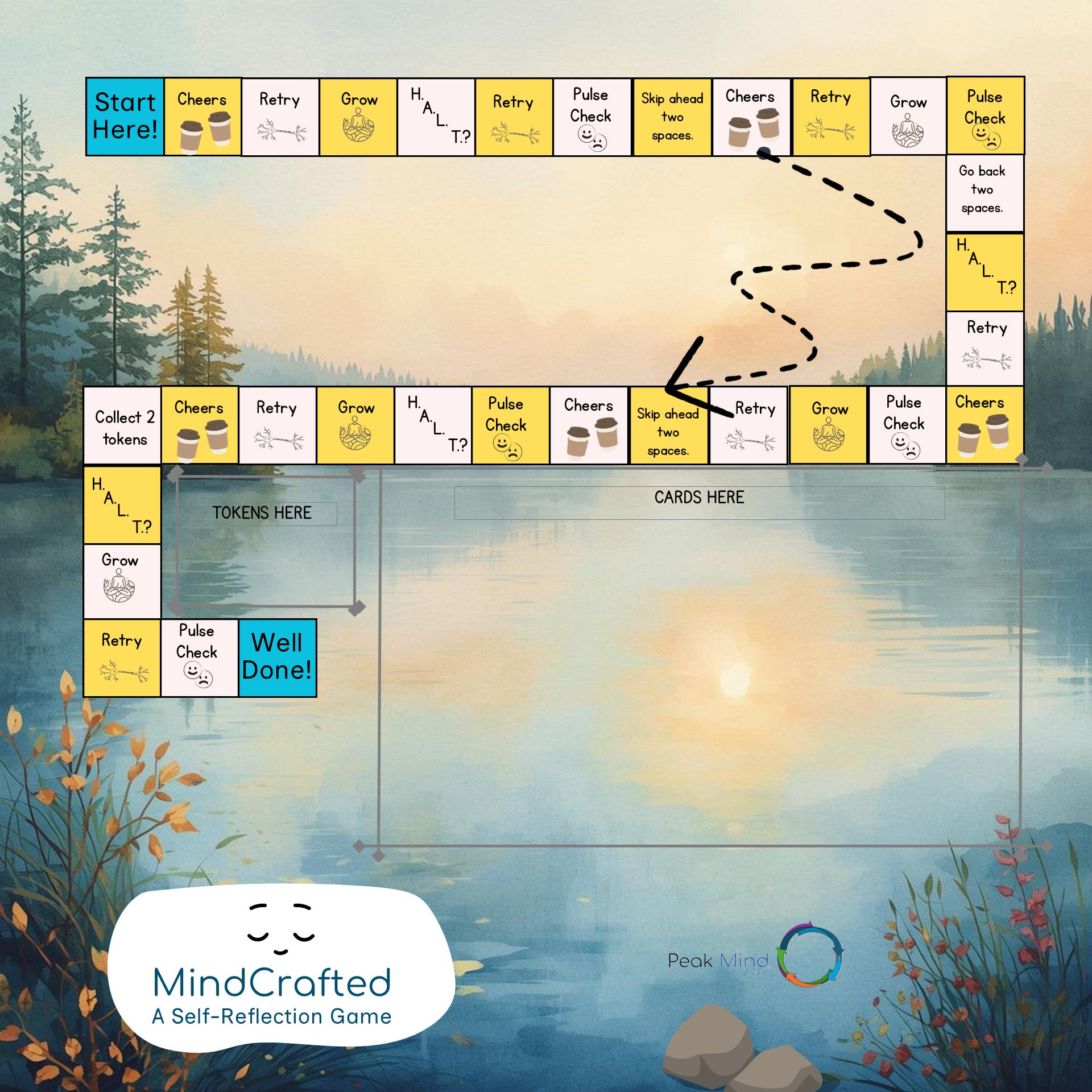 Image 2 of 9
 Image 3 of 9
 Image 4 of 9
 Image 5 of 9
 Image 6 of 9
 Image 7 of 9
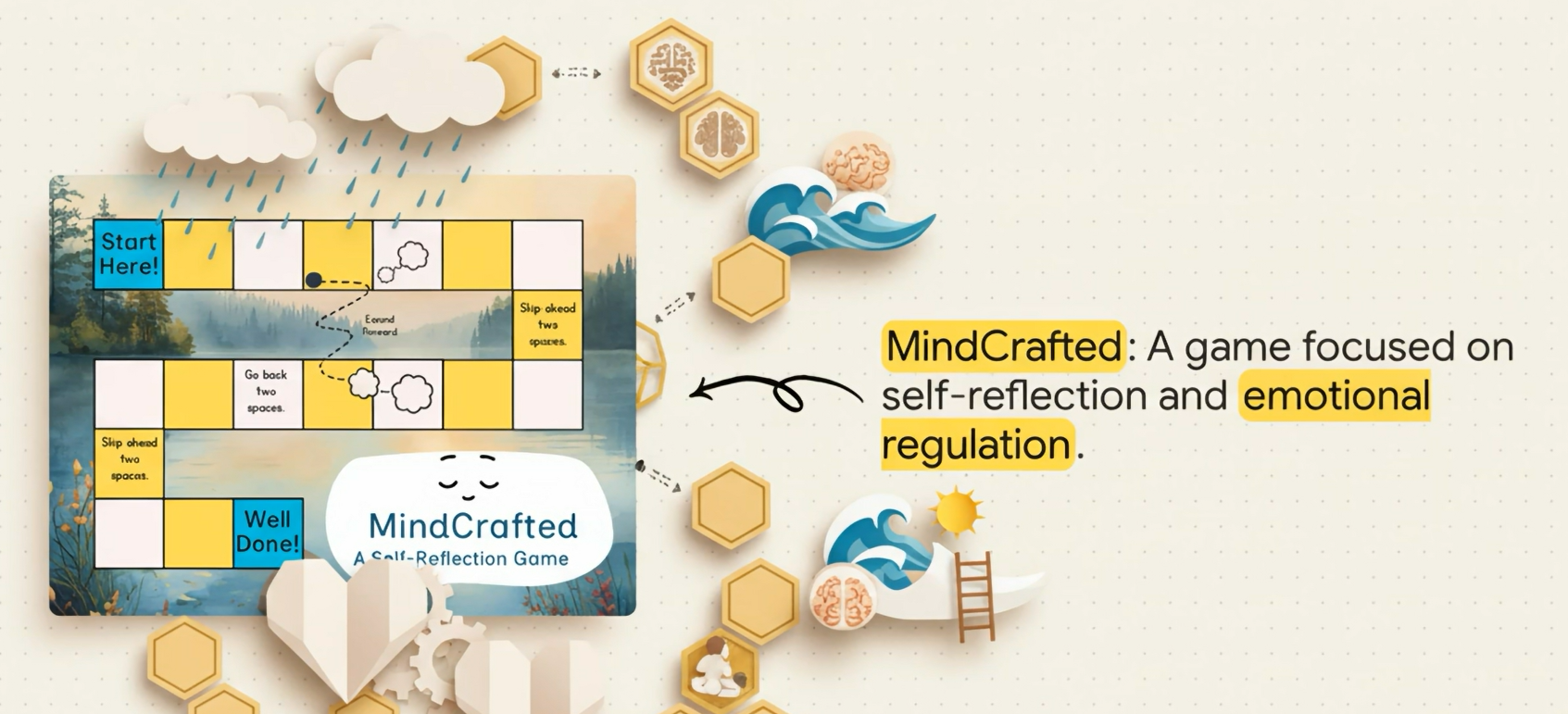 Image 8 of 9
 Image 9 of 9